You Won’t Believe What Kinshasa’s Buildings Can Tell
Walking through Kinshasa feels like flipping through the pages of a living history book written in concrete and color. I never expected this city to surprise me with its bold architectural spirit—where colonial echoes meet vibrant local creativity. From weathered facades to improvised markets beneath crumbling balconies, every structure tells a story of resilience and adaptation. This isn’t just about buildings; it’s about how a city shapes its identity through space, memory, and survival.
First Impressions: The Urban Skyline That Defies Expectations
Kinshasa greets the visitor not with towering skyscrapers but with a low-rise tapestry of textures, colors, and rhythms that pulse with urban life. Unlike many global capitals, its skyline remains unmarked by glass giants, instead shaped by the quiet dignity of early 20th-century colonial structures, modest apartment blocks, and the occasional modern administrative complex. The city spreads horizontally, its neighborhoods unfolding like chapters in a novel—each with a distinct tone, pace, and architectural language. As sunlight glances off corrugated metal roofs and painted shutters, a sense of layered history emerges, not through grand monuments alone, but through the everyday.
What stands out immediately is the absence of rigid urban planning, replaced by an organic, almost improvisational growth. Streets wind unpredictably, sometimes narrowing into alleys where commerce spills out onto sidewalks. Open-air markets thrive in the gaps between buildings, and communal courtyards form naturally where residents gather. This is not disorder, but a different kind of order—one shaped by necessity, community, and adaptation. The city’s architectural character is not imposed from above but grown from within, a reflection of how people live, move, and interact in close proximity.
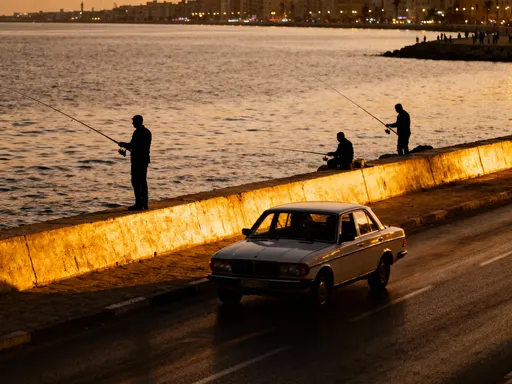
The light in Kinshasa plays a crucial role in how the city’s architecture is experienced. In the morning, soft gold washes over pastel-colored facades, highlighting peeling paint and intricate ironwork. By midday, shadows retreat beneath wide eaves and overhanging balconies, creating pockets of relief from the heat. At dusk, the city transforms again—neon signs flicker to life outside churches and shops, and lanterns glow in open-air bars. This dynamic interplay of light and structure gives Kinshasa a visual rhythm that feels both chaotic and deeply intentional, like a mural painted over decades by countless hands.
Even transportation shapes the architectural landscape. The absence of an extensive metro system means that life unfolds largely at street level. Minibuses, known locally as gbakas, weave through narrow lanes, stopping wherever passengers need to board. Bus stations are often simple canopies or open plazas, yet they function as vital nodes in the city’s social and spatial network. These informal transit hubs, though lacking in formal design, become de facto public spaces—places where news is exchanged, goods are traded, and community bonds are reinforced. Architecture here is not just about buildings; it’s about movement, connection, and the spaces in between.
Colonial Echoes: Tracing Belgium’s Footprint in Brick and Stone
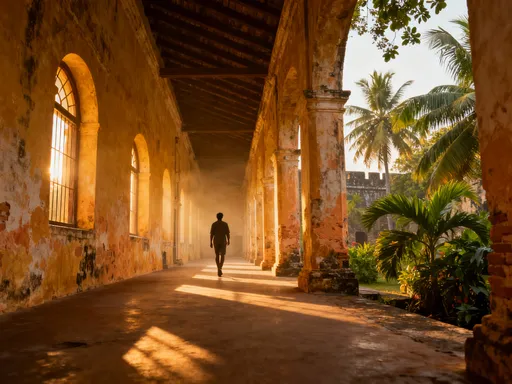
The legacy of Belgium’s colonial rule is still legible in Kinshasa’s built environment, particularly in the central districts of Gombe, Barumbu, and Ngaliema. During the early 1900s, when the city was known as Léopoldville, European architects designed administrative buildings with an emphasis on symmetry, order, and climatic adaptation. These structures featured wide verandas, high ceilings, louvered windows, and thick masonry walls—all intended to provide comfort in the tropical heat while asserting a sense of control and permanence. Today, many of these buildings remain in use, though their original purpose has shifted dramatically.
In Gombe, the heart of Kinshasa’s government district, colonial-era ministries stand side by side with post-independence additions. Their neoclassical facades, once symbols of imperial authority, now house Congolese civil servants. Columns that once framed the power of distant colonial administrators now support the daily work of a sovereign nation. The contrast is subtle but powerful: the architecture remains, but the people within have reclaimed it. Faded paint, rusted railings, and repaired roofs speak of decades of wear and maintenance, yet these buildings endure—not as relics frozen in time, but as living parts of the city’s administrative fabric.
The colonial urban plan also privileged separation—between European and African quarters, between public and private spaces. Neighborhoods like Binza and Mont Ngafula were designed with wide boulevards and spacious lots, reflecting a European ideal of order and exclusivity. In contrast, areas such as Matonge developed more densely, shaped by local needs and organic growth. This spatial divide still influences the city’s social geography today, though its boundaries have blurred over time. The architecture of the colonial era, therefore, is not just a matter of style; it is a physical imprint of historical power dynamics that continue to shape how space is used and experienced.
Yet, Kinshasa has not preserved these buildings as museum pieces. Instead, they have been adapted, repurposed, and sometimes contested. A former colonial courthouse may now serve as a regional tribunal, its corridors echoing with new legal debates. A once-exclusive social club might house a cultural center or private school. These transformations reflect a broader narrative of reclamation—where the structures of the past are not erased but reinterpreted through the lens of independence and local identity. The colonial architecture of Kinshasa, then, is neither fully celebrated nor entirely rejected; it is negotiated, one repair, one renovation, one occupation at a time.
The Rise of Concrete: Post-Independence Architecture and National Identity
When the Democratic Republic of the Congo gained independence in 1960, Kinshasa became a canvas for a new national identity—one that sought to break from the colonial past and assert a modern, sovereign presence. This ambition was expressed most visibly in architecture. The government commissioned bold, monumental buildings that combined modernist design with symbolic grandeur. The most iconic of these is the Palais du Peuple, completed in the 1970s, which houses the national parliament. With its sweeping curves, exposed concrete, and vast open plaza, the building was intended to project strength, unity, and progress.
The Palais du Peuple, designed with input from Italian architects, reflects the global trends of mid-century modernism while incorporating local context. Its elevated structure allows for airflow beneath, a practical response to the climate, while its grand staircase and colonnaded entrance evoke a sense of civic dignity. The surrounding plaza, often used for public gatherings and national celebrations, reinforces the building’s role as a symbol of democratic engagement. Though political realities have often fallen short of these ideals, the architecture itself continues to inspire a sense of national pride.
Other post-independence projects followed a similar ethos. The Zénith de Kinshasa, a large indoor arena, and the Stade des Martyrs, one of Central Africa’s largest stadiums, were built to host major cultural and sporting events. These structures were not just functional; they were statements—declarations that Kinshasa was a capital capable of hosting the continent and the world. Even smaller civic buildings, such as post offices and regional administrative centers, adopted the clean lines and geometric forms of modernism, signaling a break from colonial aesthetics.
However, the grand vision of post-independence architecture has faced challenges. Many of these buildings require significant maintenance, and decades of underinvestment have led to deterioration. Some projects were criticized for their cost and practicality, seen as prioritizing symbolism over everyday needs. Yet, for many residents, these structures remain important landmarks—tangible expressions of a moment when the nation believed in its own potential. They are not just buildings; they are monuments to aspiration, even when imperfectly realized.
Informal Ingenuity: How Residents Shape Their Own Spaces
Beyond the official skyline, Kinshasa’s most dynamic architecture emerges from the ground up—crafted not by architects or engineers, but by ordinary residents responding to necessity with creativity. In neighborhoods like Kalamu, Lingwala, and Masina, homes, shops, and workshops rise from shipping containers, wooden planks, corrugated metal, and recycled materials. These self-built structures are not temporary shelters but permanent fixtures in the urban landscape, often expanded and refined over years. What might appear as improvisation is, in fact, a sophisticated understanding of space, climate, and community.
One of the most striking features of these informal settlements is their adaptability. A single structure might serve as a home, a grocery stall, and a hair salon—all within the same day. Walls are movable, roofs are replaceable, and rooms are added as families grow. Balconies and rooftops become social spaces, where neighbors gather in the evening to talk, eat, or listen to music. Even drainage and ventilation are thoughtfully considered, with raised foundations and strategically placed openings to manage rain and heat. This is architecture as a continuous process, not a finished product.
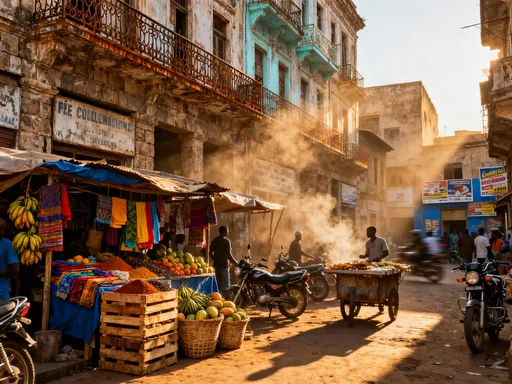
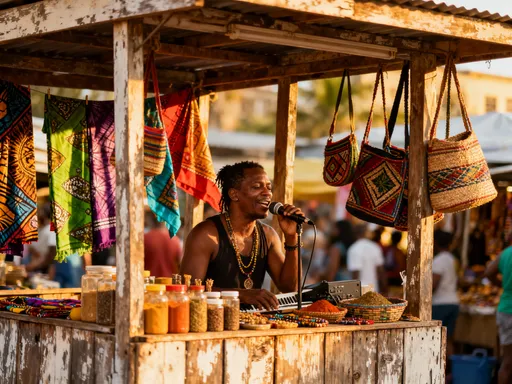
Markets in these areas are equally inventive. In Matonge, one of the city’s most vibrant commercial zones, vendors operate from repurposed shipping containers painted in bright blues, yellows, and greens. These modular units are arranged in clusters, forming narrow lanes that buzz with activity. Canopies made from tarpaulins or metal sheets provide shade, while hand-painted signs advertise everything from phone credit to traditional medicine. The result is a highly functional, visually rich environment that thrives on density and interaction.
This informal architecture is not without challenges. Access to clean water, sanitation, and electricity remains inconsistent, and buildings are vulnerable to fire and flooding. Yet, the resilience of these communities is evident in how they respond to adversity. After a storm, residents quickly repair damaged roofs. When space runs out, they build upward, adding second or third floors with lightweight materials. These solutions may not meet formal building codes, but they reflect a deep knowledge of local conditions and a commitment to making space work for people. In Kinshasa, architecture is not just about design—it’s about survival, dignity, and the right to belong in the city.
Religious Architecture: Temples of Faith and Community
In a city where faith plays a central role in daily life, religious buildings are among the most prominent and diverse architectural forms. Kinshasa is home to thousands of churches—ranging from small prayer houses to massive evangelical complexes—and hundreds of mosques, many of which have been built or expanded in recent decades. These structures are not only places of worship but also centers of education, charity, and social cohesion. Their architecture reflects both global influences and local innovation, creating a spiritual landscape as varied as the city itself.
Evangelical megachurches, in particular, stand out for their scale and visual impact. Some feature domed roofs, towering spires, and neon-lit crosses that can be seen from miles away. Inside, they are equipped with state-of-the-art sound systems, large screens, and seating for thousands. These churches often function as self-contained communities, offering schools, counseling services, and job training programs. Their architecture is designed to inspire awe and convey a message of prosperity and divine favor, resonating with a population that values both spiritual and material uplift.
In contrast, many mosques in Kinshasa adopt a more understated approach. Built in residential neighborhoods, they are often simple structures with arched doorways, minarets, and courtyards for prayer. Some incorporate traditional Congolese motifs, such as geometric patterns carved into wood or painted on walls. Others use modern materials like concrete and glass but maintain a sense of modesty and serenity. These mosques serve not only as places for daily prayers but also as hubs for community gatherings, especially during Ramadan and religious festivals.
Even smaller religious structures reveal architectural ingenuity. A converted house might become a Pentecostal prayer hall, its windows replaced with stained glass and its garage transformed into a stage for worship. A metal shack in a market area could serve as a neighborhood mosque, its roof painted green and a small loudspeaker broadcasting the call to prayer. These adaptations demonstrate how faith shapes space in practical, meaningful ways. Religious architecture in Kinshasa is not about conformity; it is about presence, purpose, and the desire to create sacred space in the midst of urban life.
Public Spaces and Urban Memory: Where Architecture Meets Daily Life
Public spaces in Kinshasa are often informal, emerging where people gather rather than where planners designate. Roundabouts, plazas, and wide sidewalks become impromptu meeting points, markets, or performance venues. The Monument de la Renaissance Africaine, a towering bronze sculpture in the Ngaliema district, is one of the few formally designed public monuments. Depicting a family breaking free from chains, it was intended as a symbol of African rebirth and empowerment. While its scale and cost have sparked debate, it has also become a landmark—a place where school groups take photos, vendors sell souvenirs, and citizens reflect on the nation’s journey.
Other public spaces are more humble but equally significant. Bus stops, though often lacking shelters, function as social hubs where people wait, talk, and share news. Outdoor cinemas, once common in the mid-20th century, still operate in some neighborhoods, their screens lit up against the night sky. Market canopies, supported by metal poles and fabric roofs, create shaded zones where commerce and conversation flourish. These spaces, though not always architecturally elaborate, are essential to the rhythm of urban life.
Monuments and memorials also play a role in shaping collective memory. Statues of national heroes, such as Patrice Lumumba, stand in prominent locations, serving as reminders of the country’s struggle for independence. Though some have been damaged or relocated over time, their presence continues to inspire discussion about history, leadership, and national identity. Even the absence of certain monuments speaks volumes—what is remembered, what is forgotten, and who decides.
The way public spaces are used reveals a deep connection between architecture and social life. A wide staircase might become a children’s playground. A government building’s steps could host political discussions. A vacant lot might be transformed into a soccer field by local youth. These acts of appropriation show that architecture is not static; it is constantly reinterpreted by those who inhabit it. In Kinshasa, public space is not just designed—it is claimed, shared, and renewed every day.
The Future of Kinshasa’s Built Environment: Challenges and Possibilities
Kinshasa’s population has grown rapidly over the past few decades, now exceeding 15 million, making it one of Africa’s largest cities. This growth has placed immense pressure on housing, infrastructure, and urban planning. Many new buildings are constructed without formal permits or engineering oversight, leading to concerns about safety and sustainability. Poor drainage systems contribute to seasonal flooding, especially in low-lying areas, while waste management remains a persistent challenge. The city’s expansion into wetlands and floodplains further increases its vulnerability to climate-related risks.
Yet, there are signs of change. The local government, in collaboration with international partners, has launched initiatives to improve urban planning and housing conditions. Projects like the Kinshasa Urban Development Program aim to formalize informal settlements, provide access to clean water and sanitation, and create safer, more resilient neighborhoods. Community-led design efforts are also gaining traction, with residents participating in the planning of public spaces and housing upgrades. These bottom-up approaches recognize that sustainable development must include the people who live in the city.
There is also growing interest in preserving Kinshasa’s architectural heritage. While colonial and post-independence buildings face deterioration, some organizations are working to document and restore key structures. Architectural tours, photography exhibitions, and academic research are helping to raise awareness about the city’s unique built history. These efforts do not seek to freeze the city in time but to ensure that its diverse architectural layers are respected and integrated into future development.
The challenge ahead is to balance growth with preservation, innovation with tradition, and formality with flexibility. Kinshasa will not become a city of skyscrapers, nor should it. Its strength lies in its adaptability, its human scale, and its ability to transform constraints into creativity. The future of its architecture depends not on grand master plans alone, but on the daily acts of its residents—building, repairing, repurposing, and imagining. As long as people continue to shape their environment with care and vision, Kinshasa’s buildings will keep telling stories—of struggle, of hope, of a city that refuses to be defined by anyone but itself.
Kinshasa’s architecture is not about perfection—it’s about persistence. Every cracked wall, repurposed hall, and hand-painted storefront reveals a city constantly negotiating with its past and imagining its future. To walk its streets is to witness architecture not as frozen art, but as living, breathing dialogue.