This Is Why Galle’s Architecture Will Blow Your Mind
Walking through Galle, Sri Lanka, feels like stepping into a living storybook. The city’s architecture—where Dutch fortresses meet tropical courtyards and colonial charm blends with local life—is unlike anything I’ve seen. You don’t just see Galle’s buildings; you feel them. Each weathered wall and carved doorway tells a tale of centuries, cultures, and quiet resilience. This is more than old stone—it’s culture shaped by time, trade, and tradition. And once you wander its lanes, you’ll get it. Galle is not a museum frozen in the past. It is a breathing, evolving city where history isn’t preserved behind velvet ropes but lived in homes, cafes, and temples that have stood for hundreds of years. Its architecture speaks in whispers of maritime empires, monsoon winds, and generations of families who have raised children within its thick coral walls. What makes Galle extraordinary is not just its beauty, but the harmony between preservation and daily life. This is a place where the past doesn’t compete with the present—it supports it.
The Heart of Heritage: Galle Fort’s Timeless Walls
Galle Fort, rising from the southern coast of Sri Lanka like a sentinel of stone and memory, stands as one of the best-preserved examples of 16th-century coastal fortification in Asia. Originally constructed by the Portuguese in 1588 as a defensive outpost against regional powers and rival traders, the fort was significantly expanded and refined by the Dutch during their colonial rule, which began in 1640. The massive ramparts, built from coral limestone quarried from the surrounding sea, stretch over 3.5 kilometers and rise up to 13 meters in height. These walls were not merely symbolic—they were engineered to withstand cannon fire, tropical storms, and the relentless advance of time. Bastions like the Sun and Moon Bastions face the Indian Ocean, their cannons long silent but their presence still commanding. The fort’s strategic layout, shaped like a horseshoe, was designed to maximize visibility and defense, with narrow gates and zigzag entry points to slow down invaders.
Today, Galle Fort is not a relic frozen in time but a vibrant residential neighborhood, a UNESCO World Heritage Site where history is not observed from a distance but lived intimately. Families raise children in homes that were once officers’ quarters, and local artisans sell handmade crafts in shops that once stored gunpowder or spices. The streets, paved with cobblestones worn smooth by centuries of foot traffic, echo with the rhythms of daily life—schoolchildren on bicycles, women returning from morning markets, and elders sipping tea on shaded verandas. This continuity is what gives Galle its soul. Unlike many historic sites that become tourist attractions stripped of their original purpose, the fort remains fully inhabited. Residents take pride in maintaining the integrity of their homes, adhering to strict conservation guidelines that preserve architectural authenticity while allowing for modern comforts.
Walking along the ramparts at sunset offers a moment of quiet awe. The sea crashes against the ancient stone, sending up salty spray, while the golden light bathes the rooftops in warm hues. From this vantage point, one can see how the fort once functioned as a self-contained world—complete with a church, a lighthouse, a clock tower, and a cricket field that dates back to British rule. The fact that people still gather here for evening strolls, photography, or quiet reflection underscores a rare truth: preservation does not require isolation. Galle Fort proves that heritage can thrive when it is integrated into the fabric of everyday life, protected not by barriers but by belonging.
Where East Meets West: Colonial Houses with a Sri Lankan Soul
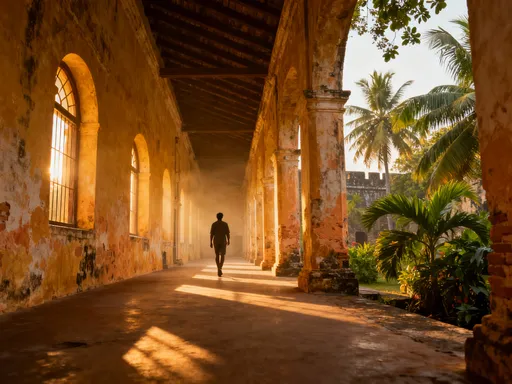
Within the walls of Galle Fort, the architecture tells a story of cultural fusion—where European design sensibilities were adapted to meet the demands of a tropical climate and local traditions. The colonial-era homes, built primarily during the Dutch and British periods, are masterclasses in architectural adaptation. These buildings feature high ceilings, often reaching over four meters, which allow hot air to rise and create natural convection currents. Thick walls made of coral stone and lime plaster provide thermal mass, keeping interiors cool even during the hottest months. Large wooden windows, crafted from teak and other durable hardwoods, are designed to swing open fully, inviting sea breezes to flow through the rooms. Many homes also include wide verandas—deep, shaded porches supported by ornate pillars—that serve as outdoor living spaces, ideal for morning coffee or evening conversation.
What truly sets these homes apart is their inner courtyards, a design element borrowed from traditional Sri Lankan domestic architecture. These open-air spaces, often centered around a small garden or water feature, act as natural cooling systems. During the monsoon season, they capture rainwater and allow humidity to dissipate, while in the dry months, they provide a private oasis of greenery and light. The fusion of Western symmetry and tropical functionality reflects a deeper truth about Galle’s history: it was never a place of rigid colonial imposition, but of mutual adaptation. European traders and administrators had to learn from local builders, who understood how to live comfortably in a hot, humid coastal environment. The result is a unique architectural language—one that respects both aesthetic order and environmental wisdom.
Today, many of these colonial homes have been carefully restored and repurposed as boutique guesthouses, art galleries, and family-run cafes. A former merchant’s residence might now house a small hotel where guests sleep in rooms with original floorboards and antique ceiling fans. A governor’s mansion could be home to a café serving cinnamon-infused coffee and short eats—Sri Lankan snacks like banana fritters and lentil rolls. These conversions are not mere commercial ventures; they are acts of cultural stewardship. By adapting historic buildings for contemporary use, owners ensure their survival while sharing their beauty with visitors. The key to successful restoration lies in balance—modern amenities like plumbing and electricity are discreetly integrated, but original features such as Dutch-style shutters, hand-carved balustrades, and terracotta roof tiles are preserved with reverence. This careful approach ensures that Galle’s architectural legacy is not lost to decay or inappropriate development.
Temples, Mosques, and Churches: Sacred Spaces in Harmony
One of the most profound aspects of Galle’s architectural landscape is the peaceful coexistence of places of worship representing different faiths. Within a small area inside and just outside the fort, visitors can find Buddhist temples, Muslim mosques, and Christian churches standing in quiet proximity. This religious diversity is not accidental—it is a reflection of Galle’s long history as a port city, where traders, sailors, and settlers from across the Indian Ocean brought their beliefs and built spaces to honor them. The architectural styles of these sacred sites differ dramatically, yet they share a common thread: they are all designed to inspire reverence, peace, and connection to the divine.
The Buddhist temples, such as the Amunugama Viharaya just beyond the fort walls, feature traditional Kandyan-style roofs with sweeping curves and intricate wood carvings. These roofs, often painted in deep reds and golds, are designed to resemble the hoods of protective serpents, symbolizing spiritual guardianship. Inside, statues of the Buddha rest under canopies adorned with lotus motifs, and the air carries the faint scent of incense. In contrast, the mosques of Galle, like the Meera Mosque near the old bazaar, display elegant minarets and domes with geometric tile work. Their interiors are free of figurative art, in accordance with Islamic tradition, but rich in calligraphy and patterned design. The Dutch Reformed Church, built in 1755 within the fort, stands as a testament to colonial religious life. Its simple stone façade, tall steeple, and arched windows reflect Protestant austerity, while its cemetery—home to centuries-old tombstones inscribed in Dutch and Tamil—speaks to the multicultural reality of Galle’s past.
What is remarkable is not just the presence of these diverse religious structures, but their harmonious relationship. There are no signs of conflict or competition in their placement; instead, they form a tapestry of faith that has evolved over time. Families from different communities live side by side, attend each other’s festivals, and respect one another’s traditions. This spirit of tolerance is embedded in the city’s architecture. For example, the placement of the Meera Mosque near the bustling market ensures that the call to prayer echoes through the commercial heart of the city, not as a disruption, but as a familiar rhythm of daily life. Similarly, the Buddhist temple’s morning chants blend with the sounds of school bells and bicycle bells, creating a symphony of coexistence. In a world where religious differences often lead to division, Galle offers a quiet but powerful example of how architecture can reflect and support peaceful pluralism.
Life Inside the Walls: Architecture That Serves Community
Galle Fort’s architecture is not only about aesthetics or historical significance—it is fundamentally functional. The city’s layout, developed over centuries, was designed to support the practical needs of its residents, from defense and trade to water supply and social interaction. Today, these same features continue to serve the community, demonstrating how thoughtful design can endure across generations. The narrow, winding streets—originally laid out for horse-drawn carriages and pedestrian traffic—now accommodate bicycles, scooters, and foot traffic with ease. Their tight grid pattern encourages walking, reduces vehicle congestion, and fosters a sense of intimacy and safety. Children play in the alleys, neighbors greet each other by name, and shopkeepers know their customers’ preferences—all made possible by a human-scale urban design that puts people first.
One of the most enduring functional elements is the network of ancient wells scattered throughout the fort. These hand-dug wells, some over 200 years old, were essential for providing fresh water before modern plumbing. Remarkably, many are still in use today, maintained by local families and community groups. Their survival is a testament to the durability of traditional craftsmanship and the value placed on self-sufficiency. Similarly, the arcades that line many of the main streets—known locally as “verandahs” or “piazzas”—were originally designed to protect goods and people from heavy monsoon rains. Today, these covered walkways host bustling markets, tea stalls, and artisan shops, creating vibrant public spaces that thrive year-round. The design is simple but effective: stone columns support thick roofs, creating shaded corridors that remain cool and dry even during the heaviest downpours.
The integration of form and function extends to everyday objects as well. Doorways are often raised slightly above street level to prevent floodwater from entering homes during the rainy season. Windows are positioned to catch cross-breezes, reducing the need for artificial cooling. Even the placement of trees and plants follows practical logic—mango and coconut trees are planted near homes not only for shade but for food. These small but meaningful details reveal a deep understanding of local conditions, one that modern urban planners are beginning to rediscover. Galle’s architecture proves that beauty and utility are not opposites—they are partners in creating spaces that are not only livable but beloved.
Hidden Details: What Most Travelers Miss in Galle’s Design
While many visitors are captivated by Galle’s grand facades and sweeping views, the true genius of its architecture lies in the details—small, thoughtful elements that reveal the ingenuity of past builders. One such feature is the ventilation system built into the walls and roofs. Many colonial homes include small, elevated vents near the ceiling, known as “air bricks,” which allow hot air to escape while drawing in cooler air from below. This passive cooling method, developed long before electricity, remains highly effective. Similarly, the use of lime plaster on exterior walls is not merely decorative. This traditional material, made from burnt coral and water, is naturally porous and breathable, helping to regulate indoor humidity and prevent mold growth in the damp coastal climate.
Another subtle but significant detail is the design of doors and windows. Many homes feature double-layered doors—one solid outer door for security and privacy, and a lighter inner door with glass panels for light and ventilation. Door knockers are often shaped like lotus blossoms or fish, symbols of purity and prosperity in Sri Lankan culture. These artistic touches are not mere decoration; they reflect a worldview in which beauty and meaning are woven into everyday objects. Window shutters are typically painted in deep greens, blues, or reds—colors that not only add charm but also protect the wood from UV damage and termites.
Even the roofing materials tell a story of adaptation. Most buildings use flat terracotta tiles, laid in overlapping rows to allow airflow beneath. This design prevents excessive heat buildup and extends the life of the roof. In some homes, small gaps between tiles are left intentionally to allow birds to nest—a practice that once helped control insect populations naturally. These quiet innovations, often overlooked by casual observers, demonstrate a deep respect for both nature and craftsmanship. They remind us that true sustainability is not a modern invention but a legacy of living wisely with the environment.
Staying in History: The Rise of Heritage Stays
In recent years, Galle has seen a growing number of heritage stays—carefully restored colonial buildings that now operate as boutique guesthouses, bed-and-breakfasts, and cultural retreats. These accommodations offer travelers more than just a place to sleep; they provide an immersive experience in Galle’s architectural and cultural heritage. Guests can wake up in a room with 200-year-old beams, enjoy breakfast in a courtyard shaded by frangipani trees, and fall asleep to the sound of waves against the fort walls. Unlike large hotels, these small-scale lodgings are deeply integrated into the local community. Owners are often long-time residents or passionate preservationists who share stories, recommend hidden gems, and invite guests to join in local traditions.
The rise of heritage stays has had a positive impact on conservation efforts. By generating sustainable income from tourism, these properties help fund ongoing maintenance and restoration. Many owners reinvest profits into preserving original features, sourcing local materials, and training artisans in traditional techniques. This model of responsible tourism ensures that preservation is not dependent on government funding alone but supported by a living economy. It also encourages respectful visitor behavior—guests are more likely to treat a historic home with care when they understand its significance and meet the people who care for it.
For travelers, staying in a heritage property is a chance to connect with Galle on a deeper level. It transforms a visit from a sightseeing tour into a lived experience. One might have tea with the host, learn how to prepare a traditional Sri Lankan dish, or receive hand-drawn maps of quiet walking routes. These personal interactions foster empathy and understanding, breaking down the barrier between tourist and local. Moreover, heritage stays often prioritize sustainability—using solar power, rainwater harvesting, and organic gardens—aligning with the very principles embedded in Galle’s original design. In choosing to stay in these spaces, visitors become part of a larger story of preservation and continuity.
Why Galle’s Past Is the Future of Sustainable Design
As the world grapples with climate change, urban sprawl, and energy dependence, Galle’s architecture offers timeless lessons in sustainable living. Long before the term “green building” existed, the city’s planners and builders were practicing it. They used locally sourced materials—coral stone, lime plaster, teak wood—that required minimal transportation and processing. They designed for passive cooling, natural light, and ventilation, reducing the need for artificial energy. They created walkable neighborhoods with mixed-use spaces, where homes, shops, and places of worship coexist within a compact area. These principles are now being championed by modern architects and urban designers as essential for creating resilient, low-carbon cities.
Galle’s human-scale design also promotes social sustainability. The narrow streets, shared courtyards, and public arcades encourage interaction, trust, and community cohesion—qualities that are often missing in modern urban developments. In an age of isolation and digital disconnection, Galle reminds us that well-designed spaces can foster real human connection. The city’s ability to adapt without losing its identity shows that sustainability is not about freezing a place in time, but about evolving with wisdom. Each generation has added to Galle’s story without erasing the past, proving that progress and preservation can go hand in hand.
For architects, planners, and everyday citizens, Galle stands as a model of how to build with respect for both people and planet. Its architecture is not just beautiful—it is intelligent, resilient, and deeply rooted in place. As more cities look for ways to reduce their environmental footprint and strengthen community life, they would do well to study the quiet wisdom of Galle. Its stones may be old, but its lessons are urgently modern.
Galle isn’t frozen in time—it’s evolving with it. Its architecture stands as proof that culture isn’t preserved behind glass, but lived, adapted, and shared. To walk its streets is to witness how history, when honored, can shape a future that’s both beautiful and sustainable. Visit not just to see, but to learn—and be changed.